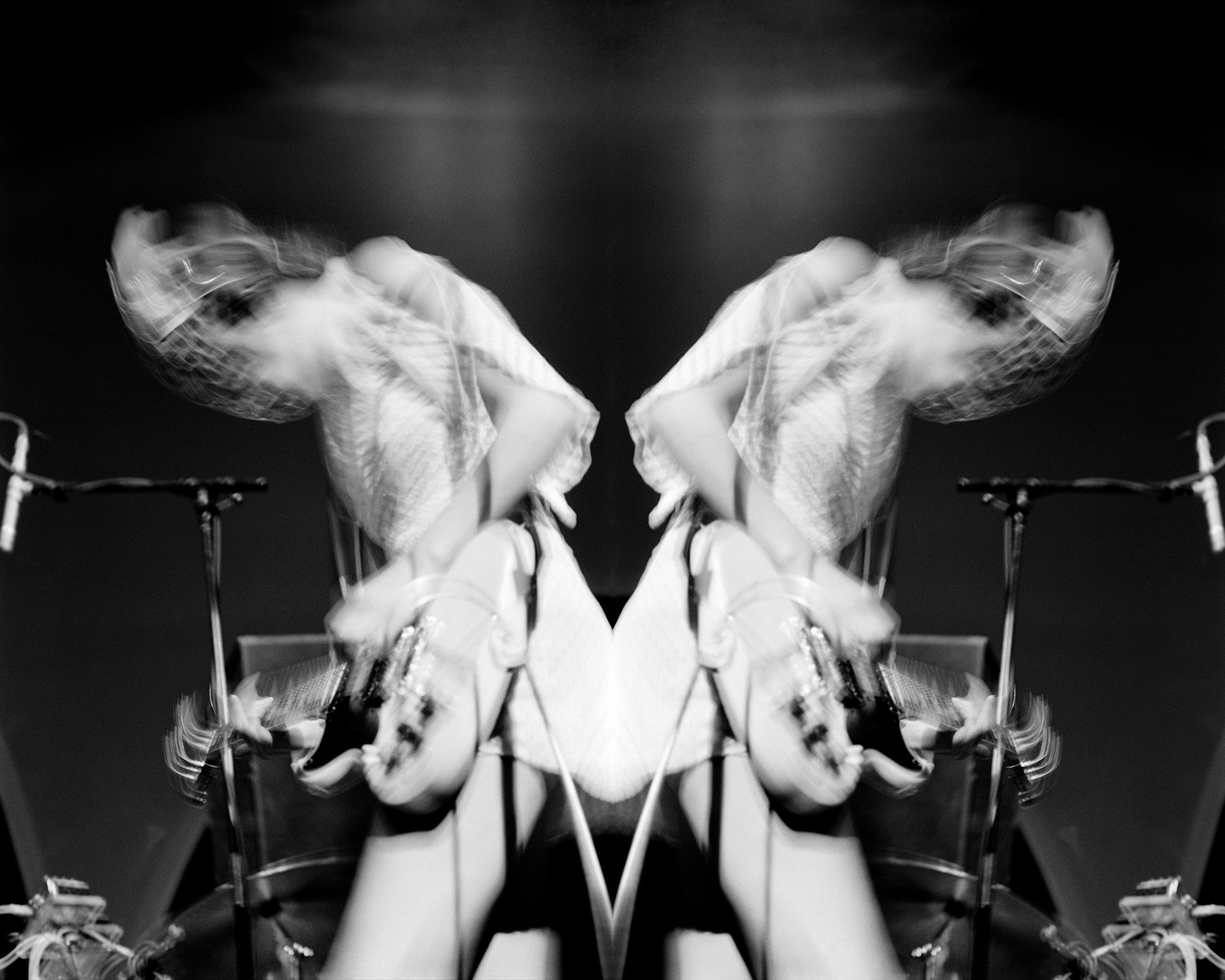
Naming a song “Fuzzy Sunshine” on an album filled with both fuzz and sunshine-invoking riffs may be a little on the nose. But there’s truth in advertising because that’s exactly what the song sounds like, and for the most part it’s what Acapulco Lips’ “Now” sounds like too.
While the album has a retro sound, it also has the hallmarks of a modern Northwest rock record, proudly boasting PNW influences alongside iconic sounds of the 1960s. The fuzzy riff of “The Flim-Flam” would make Mudhoney jealous and “Everyday” sounds like what might’ve happened if The Sonics were a surf rock band instead of proto-grunge garage rockers.
The record’s modern-retro sound is the perfect soundtrack for all of your barbecues at the beach and late-night bonfires. It’s a dreamy, sunny, fuzzy and fun addition to the canon of Pacific Northwest rock ‘n’ roll that will make any playlist shine.
In this interview Acapulco Lips’ singer, songwriter and bassist Maria-Elana Herrell talks about wearing her influences on her sleeve, early musical memories and why it took nine years to create her band’s latest album “Now.”
TH: Congratulations on the record. It is refreshing to hear something old that’s new, if that makes sense. I enjoy a lot of a lot of older garage rock so it’s very up my alley.
MH: Awesome. Yeah, we do too. We’re all into all facets of 60s music. If you have the benefit of getting access to all of this recorded material from like 60 years ago why not pull the things that you like the best from all of it and try and mash them up into something really cool? I think what we try to do.
TH: Let’s talk influences. You guys definitely you’re your influences on your sleeve as far as what you play. What are some of your influences that people might be surprised about?
MH: I don’t know. I’m super into Motown, soul, R&B, 60s stuff. Girl group stuff. But also just pop. I really love like a cool organ or keyboard melody going through something and that’s, you know, I think sometimes on the pop 60s side of things. But I don’t think that anything would really be surprising. Maybe that I’m so into the R&B and soul part because I wish I could sing like that, but I don’t think I can
TH: So, tell me a bit about the band and how you guys got started.
MH: I actually put out a Craigslist ad in like 2012 and I found our one of our original guitar players, Riley, and then I think next we found Christopher (Garland, the band’s guitarist), who’s still in Acapulco Lips. He and I are like the from the beginning members and then we found a drummer, Davy, who had just moved here from France. And we played like that for a few years.
And then Riley left the band and we just stayed a three piece and then Davy actually had to move back to France for some time. So that’s when Jordan (Adams, the band’s drummer) started playing with us.
We released the first record and it was me, Christopher and Davy. And when Davey left we were writing with Jordan. That’s how the newest record came together. And when we were done with this record, we were like, ‘Whoa, we kind of wrote like a lot of parts here.’ Like a lot of vocal parts, a lot of extra percussion, some extra guitar parts. And we’re like, let’s maybe find some somebody to help us pull this off, better live.
And so Jordan found (keyboardist) Brady Harvey. And I put out another Craigslist ad and we found (guitarist) Selena Gomez, who’s also playing with us. We were seeking out one person. We found two. And it’s just been really excellent playing as of five piece.
TH: I read that it took you nine years to put this album together. What went into the process of creating “Now?”

MH: We’ve always, with this band, written real collaboratively. We pretty much start from scratch all together and work through the songs, which I think takes a lot longer. But I think in the end we end up with something that we all care more about or feel like we actually have ownership of, and we feel satisfied by what we’re doing.
Pre-pandemic we recorded half of the record then we pretty much took a break because I had a young kid at home and we all were trying to make sure that we kept each other safe and we kept each other’s families safe during that time. We did not do a whole lot and we didn’t really meet up for practice.
But we were like, oh, we’ve got the record halfway done. So, you know, we’d just be jotting down ideas as they came. We knew whenever we reconvened we would keep on working.
A long story short, that half of the record gets lost in a hard drive switch. So then we had to go re-record everything. We worked really hard to finish the second half of the record. And then the studio that we recorded in got sold. So the studio had to relocate and when they did it was to a building that wasn’t built out yet. So we waited until earlier this year to finish mixing and finally get the record out. It’s been a lot of adversity to say the least.
TH: You’re originally from Austin.
MH: I moved to Seattle in 2010 from Austin.
TH: What made you want to move to Seattle?
MH: I had been here on tour with several other bands and my favorite places that we had been in the states were Seattle and Atlanta. I just thought that the people that I was meeting were people that just seemed like they were into what I was into. There were, you know, plenty of venues to play and a lot of support in the music scene. It seemed really similar to Austin. And I was just kind of ready for a change.
TH: Talk to me about some of the theme of time on the record and where that came from.
MH: I think I’m a person that’s pretty anxious typically, and I think about death a lot. I think that it’s like, alright, well, death comes in time. I think that’s always been a constant for where my brain goes.
As we were working on these songs one of the things that I’ve kind of kept subliminally in my mind is this like moment. I think it was third grade. Our teacher had us sit down in silence and she wanted us to look at the clock on the wall. And she made us watch from the point that it went from 12 back around to 12 for a minute. And then she was like, that was a minute. You can’t ever get that back. That was time.
That’s something that’s always stuck with me.
TH: That’s heavy for third grader.
MH: Yeah, it really is. I talk to my daughter now and I’m letting her stay up later because it’s the summer and most days we don’t have anything planned. And I’m like, what time did you go to bed? And she’s goes, ‘I don’t know, I don’t know time.’ And I’m like, that’s an excellent place to be. I’ll try and keep you there as long as I can.
TH: Speaking of being young, what is your earliest musical memory?
MH: Let’s see. I don’t know. My first concert was new. Kids on the Block when I was in first grade. I was probably like six.
I had to get all As for the semester to get to. And probably not long after that was The Temptations and The Four Tops at Fiesta Texas and that was I think definitely a massive ‘whoa.’ Like, I love this moment.
TH: That sounds like a great concert.
MH: Yeah, maybe like some of my first getting drawn into 60s music for sure.
TH: Did you have a feeling then that you wanted to become a musician, or did that come later?
MH: I don’t think that I did. I actually used to date somebody that was in a band. And I found that a lot of times we were just sitting around while he was playing guitar and I was watching The Simpsons with the captions on. And at a certain point I was like I bet you could show me how to play. And then we’d be doing something together.
TH: So what is it about the 60s? What is it about this music that inspires you?
MH: I think about that and sometimes I land at like maybe I existed before during that time and I had a really great.

I think to some people it maybe sounds dated. I think that certain music from the 80s sounds real dated, like with synths and keyboards. I feel like that sounds really dated.
And I think to me 60s music doesn’t ever sound dated. It just sounds good. It’s exciting and dangerous, or it sounds really warm. It does not sound dated at all to me.
TH: So how do you manage to put such serious and broad themes like time into such sunny music? It’s almost like a musical Trojan horse.
MH: I don’t know. I guess I do that. You know, when I listen to certain songs from the 60s I feel like that’s what they do. The music is poppy, very pretty and kind of uplifting sounding, but then the content, if you listen to it, isn’t always right. Like ‘Leader of the Pack. That’s a dark song. So I think that’s something I’ve picked up on.
TH: What led to the decision to bookend the record with “Welcome to the Other Side” and “See You on the Other Side?”
MH: So we started writing that song as one song. Somehow we started talking about Tommy Roe and “Dizzy” and that drum beat. And so we started from there and then we wrote the song.
And then Christopher had gone home and listened to it and he was like, what if we make it into two parts? Then, it just made sense for them to begin and end the record. It pulls in this idea of a record that knows that it’s a record.
TH: Is there any sort of special sauce that goes into making something retro sound modern?
MH: Christopher is just the tone master. Every practice it’s like, let’s check out your peddles because he’ll usually have either a new pedal or a new guitar or something that he’s wanting to try out. So I think he definitely drives the guitar tones and sounds.
I wouldn’t say there’s anything that we do intentionally to try and be modern. Maybe it’s just what you end up with when you exist in a certain era and have listened to things from that time that you’ve studied or spent a lot of time with. It’s like you’re still gonna be a product of your musical environment to some extent
Discover more from Guerrilla Candy
Subscribe to get the latest posts sent to your email.