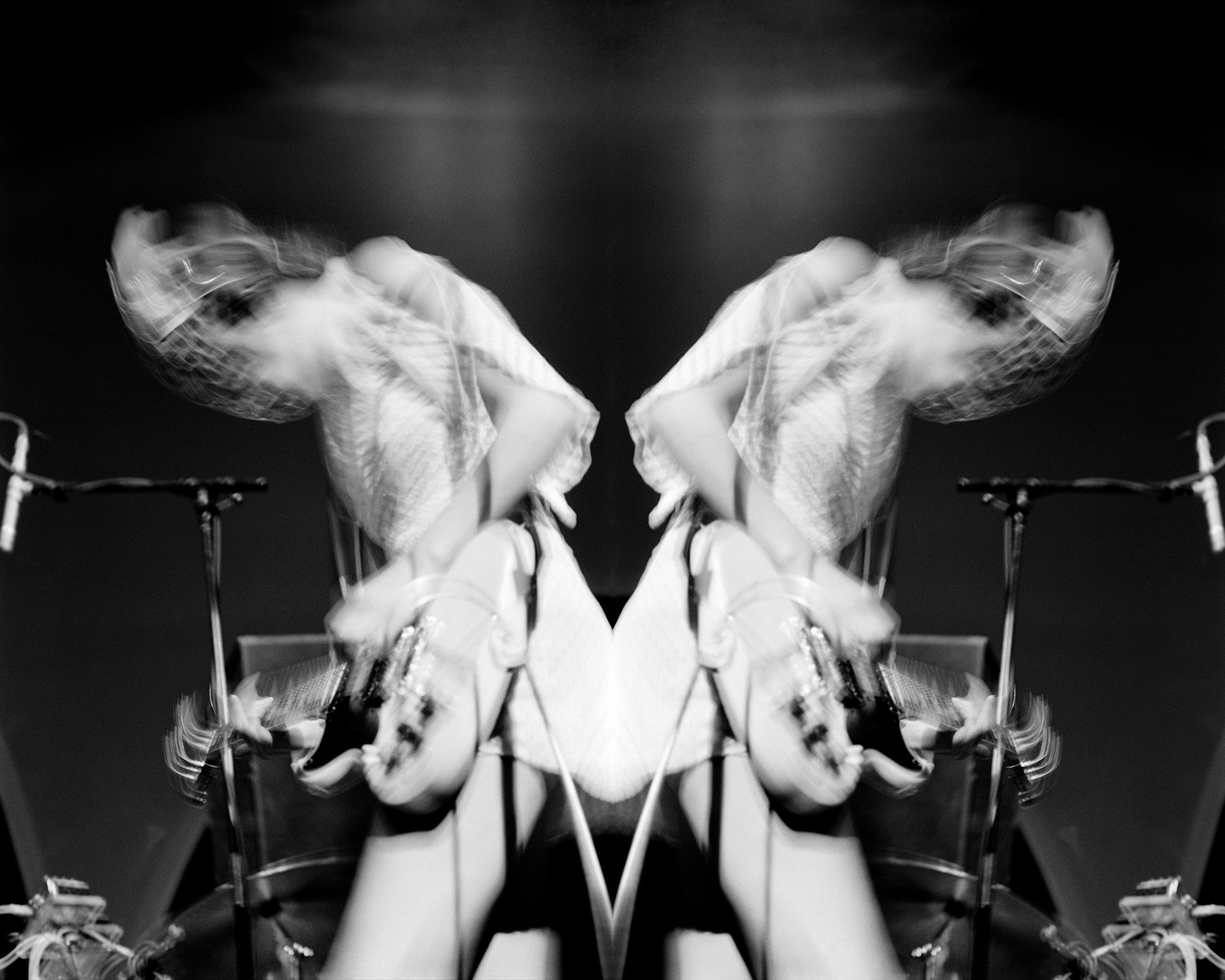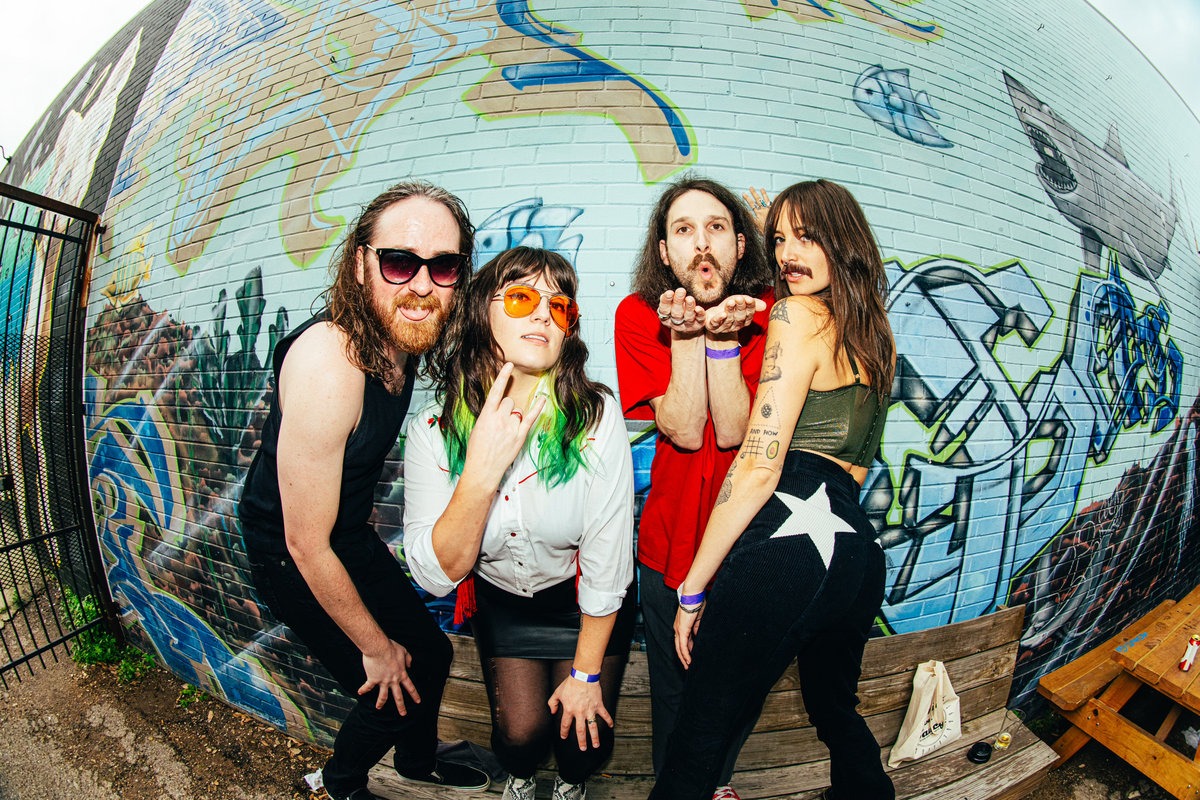
Take a base of good old fashioned garage rock, toss in some glam add a dash of punk and mix it all with a heavy dose loud guitars, thundering bass, driving drums and fierce, female energy and you’ve got yourself Seattle’s Linda From Work.
The band is a group of four best friends (vocalist/guitarist Hillary Tusick, drummer Sam Nowak, guitarist Elliott Gregory and bassist Shayla Riday) who make up one of the most exciting, young Seattle bands around. Their latest album, which is a self-titled effort, features 12 tracks of rock ‘n’ roll fun thatprovide a blast of fresh, spirited musical energy for your ears. The record drops Oct. 17 and I chatted with LFW singer Hillary Tusick ahead of its release. Here’s an edited transcript of our conversation.
First obvious question. Let’s get it out of the way. Who is Linda and where does she work?
Well, Linda… Honestly, she’s become kind of this mythical figure. Because while I was inspired by a real person, a real co-worker at some point, we kind of all, I feel like, have somebody that we work with or have worked with where they’re not like a bad person.
They’re not actively antagonizing you. But everything about them just makes your skin crawl. They just are constantly bothering you, annoying you.
You’re trying to get your work done. They won’t stop talking about their niece’s piano recital or showing you 16 pictures of their cats. So, it’s like there was an original person, actually a co-worker of my cousin’s years ago when we were naming the band, that was actually Linda from work.
But she’s taken on a whole new life of her own, I think. So, Linda is kind of… All of us have a Linda. Yeah.
Everyone’s got a Linda. Whether her name’s Gloria, whether it’s Keith. Like, there’s always somebody.
So, since Linda from work is this kind of obnoxious person, where you have these obnoxious interactions. What’s your most obnoxious work experience?
Honestly, and it’s not even that the job itself was that bad. I was working for an architectural engineering firm.
I was their admin. It was right around, like, the pandemic times, too, during lockdown. But even before that, I just hated this job. I was in three bands, working full time. I wasn’t sleeping. I was just really pushing myself way too hard.
And so, then, anytime anyone came up to me and asked probably a pretty reasonable request of me at my work, I was like, this is the worst. I hate this place. I hate these people. I’m sick of making coffee and answering phones. This is garbage. I’ve got to quit.
So, I feel kind of dumb for being like, wow, that was my most obnoxious job experience. Because it wasn’t so bad. It was everything about it just was such a bad fit for who I am and the way that I work as a person.
But, yeah, especially then in lockdown, it started to get pretty annoying because I had to be in the office to take care of the office while everyone could work from home. That was kind of where I put my foot down. I’m like, all right, it’s time to find something new.
You’re not from Seattle originally. How did you find your way here?
Well, I was born originally in Cleveland, Ohio. And when I went to college, I first started off in Chicago, but then I transferred to the University of Texas in Austin. Kind of on a whim, I had a friend who was moving down there, and I’m like, seems like a cool spot. It’s a creative city, a lot of musicians there.
And I’m like, all right, I’m going to try something new. And that was actually where I met Sam, our drummer, and we started dating then. And when we decided eventually once we graduated to leave Austin, because he was born and raised there and wanted to try out a few different cities, we went back to Chicago for a few years because I still had friends in the area.
But after a couple of years, we were having a hard time finding jobs, and a lot of those friends were also moving out west. We decided, you know, it’s another amazing city for music, Seattle, and we had it in our heads we were going to at least try out a bunch of different cities. In the same way we had been in Chicago two years, we were going to go to Seattle for two years, and then maybe L.A. for two years, and just kind of keep bopping around.
But we moved out here, and we just kind of fell in love with it. It’s such an amazing—first of all, it’s a beautiful city, and it’s a really cool area of the country to live in. But then also the music scene here is just such a supportive community, more so than anywhere else I’ve ever been.
And we just really decided we wanted to be a part of it, and we’ve been here ever since.
Yeah, I wanted to ask you about that, the scene itself. I’m glad you talked about it, because it’s something that a lot of people who don’t go to shows a lot, or who just occasionally catch a gig every once in a while, they don’t really—they’re not in it, or they don’t understand it quite as much. As someone who’s entrenched in the scene, what are some misconceptions about being a musician in Seattle that you might want to clear up, and what are some really great things about being a part of the Seattle music scene?
Ooh, okay. Some misconceptions. I think sometimes if you aren’t very thorough in maybe going out to shows and staying on tabs of everything, you might get locked into just one genre, thinking it’s only the punk house show scene. It’s only the psych scene or indie pop.
And there’s just such a multitude of different genres that are all thriving right now, I feel like, in the Seattle scene. There are just so many talented musicians, again, in so many different genres, that it’s kind of astounding to see everyone still supporting each other, even though it’s not necessarily in the same genres as their own projects.
And I think that just kind of makes a really wonderful melting pot. But again, if you’re so locked into not being exploratory, you might miss a real diamond-in-the-rough sort of situation. And I’m sorry, I am still waking up with a second question.

What are some of your favorite parts of the Seattle scene?
I do love that at so many different levels. At any night of the week, you can usually find a really cool gig somewhere around town.
The music venues themselves in Seattle are unparalleled, I think. Everything from the large venues of Showbox, Paramount, getting into the Crocodile, Neumo’s, all the way down to Connor Byrne coming back as a collective co-op of a venue. So there’s so many amazing platforms for artists of all ranges and levels, so to speak.
At any night of the week, you go and you can find a really good show. And I think that’s amazing. I don’t feel like I’ve necessarily experienced that in other cities. There’s just so much, I guess, talent to explore in this city. And they actually have the venues to do that. And it’s fun.
Honestly, so much of the music that’s coming out right now is passionate, it’s danceable. There’s an atmosphere at most of the shows where you can just feel like, okay, everyone’s either ready to party together, to rage at the world together, mosh, dance, or just kind of vibe out if it’s more chill and casual. And I love that.
My favorite thing to do on a night out is to go out and see live music. You mentioned fun. And that’s the word that comes to mind when I think of Linda From Work. So let me ask, what are some of the ingredients to a Linda From Work song?
I mean, I think, for sure, we like to go big.
We like to really just let it rip as far as vocals and guitars go, for sure. And it’s fun. We kind of just take the training wheels off and like, we’ll just let it all rip as much as we can kind of just keep building on and make it like a wall of sound.
And then we have a hard time writing slow songs. So I think that adds to it a little bit. We have a really energetic backbeat going through it.
Like with Sam on drums and Shayla on bass, we really, I think, lay a foundation for that wall of sound with like our high energy. We throw in like, I would say it’s a lot of like garage rock, distortion, fuzziness, but with clear melodic guitars and vocals that almost, I feel like, take us back to like 70s rock or like arena stadium style bands.
Also, we’re just four best friends. We have the most fun ever writing and playing together and performing together. And I feel like that just inherently shines through, because we’re just having the time of our lives. Anytime we’re writing or performing, we’re just a bunch of goofballs who manage to end up in a band together.

Well, you can tell that you’re having fun and that there’s chemistry musically because it shines through in the music for sure. I wanted to ask also, your last record, you worked with Jack Endino. What was that experience like and what did you take away from it that you might have used for this current record?
So working with Jack was amazing. We met him because we played a show with a band that he and his wife were in years ago. And we were so honored that he agreed to work with us for not only that record, but then our first EP too.
So our very first actual recording as a band. And that was amazing. Like he, one, was so funny and dry, but also just like you can tell the amount of experience he has.
Like you can just work so quickly, so efficiently. And we got to use some incredible equipment. And then like for that record, I recorded my guitar parts on the actual amp that Kurt Cobain used for Bleach.
Which was amazing, but also a little scary. I’m like, oh my God, I hope I don’t fuck this amp up.
But no, that was an incredible experience working with him. We certainly are still in touch and I hope to do some future work with him as well.
So what led to the decision to open the album with an instrumental?
Honestly, that was Elliott, our guitarist’s idea.
He’s always had the dream of doing a Black Sabbath thing? It’s the Black Sabbath, Black Sabbath on the album, Black Sabbath. He came to us with this riff and it was too short to really make it into an actual song. I didn’t really know how I was going to layer vocals on it.
And we’re like, this is the perfect opportunity for Linda from Work, by Linda from Work, on the album, Linda from Work. I thought it created this kind of like dramatic, really bold, like kicking off the record sort of feel to it. To like, basically like kick the door in and be like, and now the rest of the album.
That’s exactly what it does. It’s very much, I heard him like, oh, this is going to be that kind of record. I’m going to have to turn this one up.
What was your worst show experience as far as being in a live band? You’ve probably played dives, you’ve played bigger stages …
I’m trying to think, what would be the worst? Because I mean, every band, when you’re starting off, you’re going to play to rooms where you’re just playing to the bartender and the other bands. Especially then when you’re first hitting the road.
I mean, you’re in new cities and people don’t know who the hell you are yet. So that’s tough. But I think maybe one of the weirdest ones was when we were on tour, we had kind of a random one-off stop in Sonoma, in wine country. And it was a nice space. Everyone working there was very pleasant. But you could tell they were not used to having a full rock band.
Maybe it was more acoustic focused. And so we’re setting up, we’re doing our sound check. And just through sound checking we were trying to be quiet, but you know, it’s only so much you can do with amplifiers and a drum kit.
And there were already people being like, excuse me, can you turn that down? We’re like, oh no, this is going to be a rough one. But we made the most of it.

So what’s the most challenging part of being in a band? What’s something that somebody who isn’t in a band wouldn’t think of? Is it loading gear? Is it, I don’t know, going on tour, sleeping in a van? What are the things that people who are in a band would be surprised that are as challenging? Some people see being in a band, I see it as being glamorous.
You’re on stage, I know it’s not glamorous, but you’re on a stage, you’ve got everybody’s attention, you’re playing your instruments, everybody’s singing along, you’re giving people happiness in the moment, but that’s only for 35 minutes to an hour of your day. I mean, yeah, loading gear in and out, not always fun, especially if the venue has stairs and no elevator. But honestly, I think the logistics, and luckily, I’m pretty type A, I’m pretty good at keeping on top of everything, like tour planning or the emailing part of it, all those really boring logistics to make all the shows happen, to make the recordings happen.
I would say one of the hardest things, it’s honestly, I think something every band has to deal with is just you’re coordinating four adults with four different schedules and there’s family, there’s friends, there’s partners, it’s just tough to coordinate sometimes everyone’s schedule. Like even for interviews sometimes, I’m like, all right, well, Sam and I work at a music venue slash bar, so we’ve got nights and weekends. Shayla works at Hotel Crocodile, so she’s got weekends, but Elliott is only free on the weekends.
And so it’s kind of just a weird, it’s difficult to coordinate sometimes, just everyone’s availability for anything as small as band practice, let alone tours or things that are much more time intensive. But I mean, overall, I think if you have the right group of people, a lot of the annoyances of the minutiae, mundane stuff that you have to do to be in a band, you can kind of brush past and just focus on the fun stuff, like the actual performing, doing the shows, the rewards of all your hard work when you finally release new music and things like that.
Lastly, what do you want people to get out of listening to Linda from Work the Record? What do you want people to feel?
I hope, honestly, it might sound cheesy, I kind of hope it moves people. We are a band that, we’re fun, but I feel like we make angry music too, lyrically. I put a lot of my frustrations and anxieties and worries into these songs and the lyrics and their subject matter.
And I hope it just resonates with somebody, whether it’s through the instrumentals, whether it’s through the actual lyrics, the words themselves. We hope, yeah, just that some people resonate with it. It connects, or it hits them and they just feel something.
They feel connected to what we’re trying to say. Because, I mean, it’s a tough time to be a musician or a creative person these days. Like, there’s a lot of uncertainty in the world. I know we’re all feeling it. And if our music can, yeah, provide some like, whether it’s solace or enjoyment, I feel like we’re accomplishing what we set out to do.
Discover more from Guerrilla Candy
Subscribe to get the latest posts sent to your email.