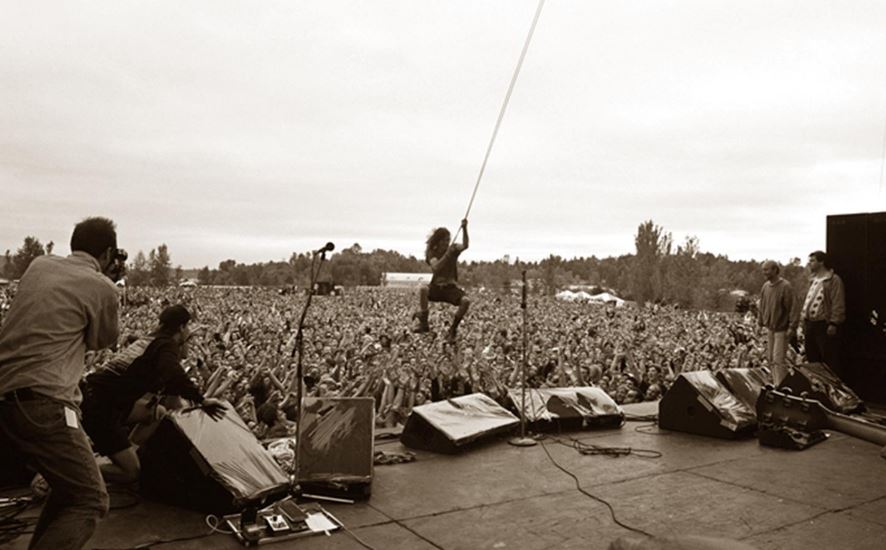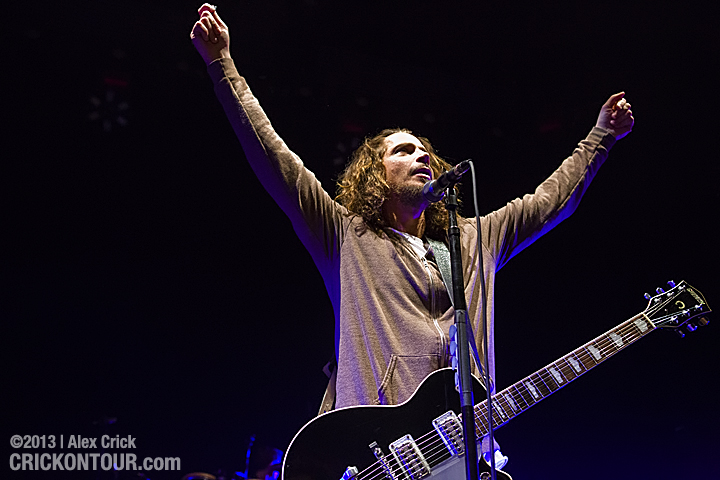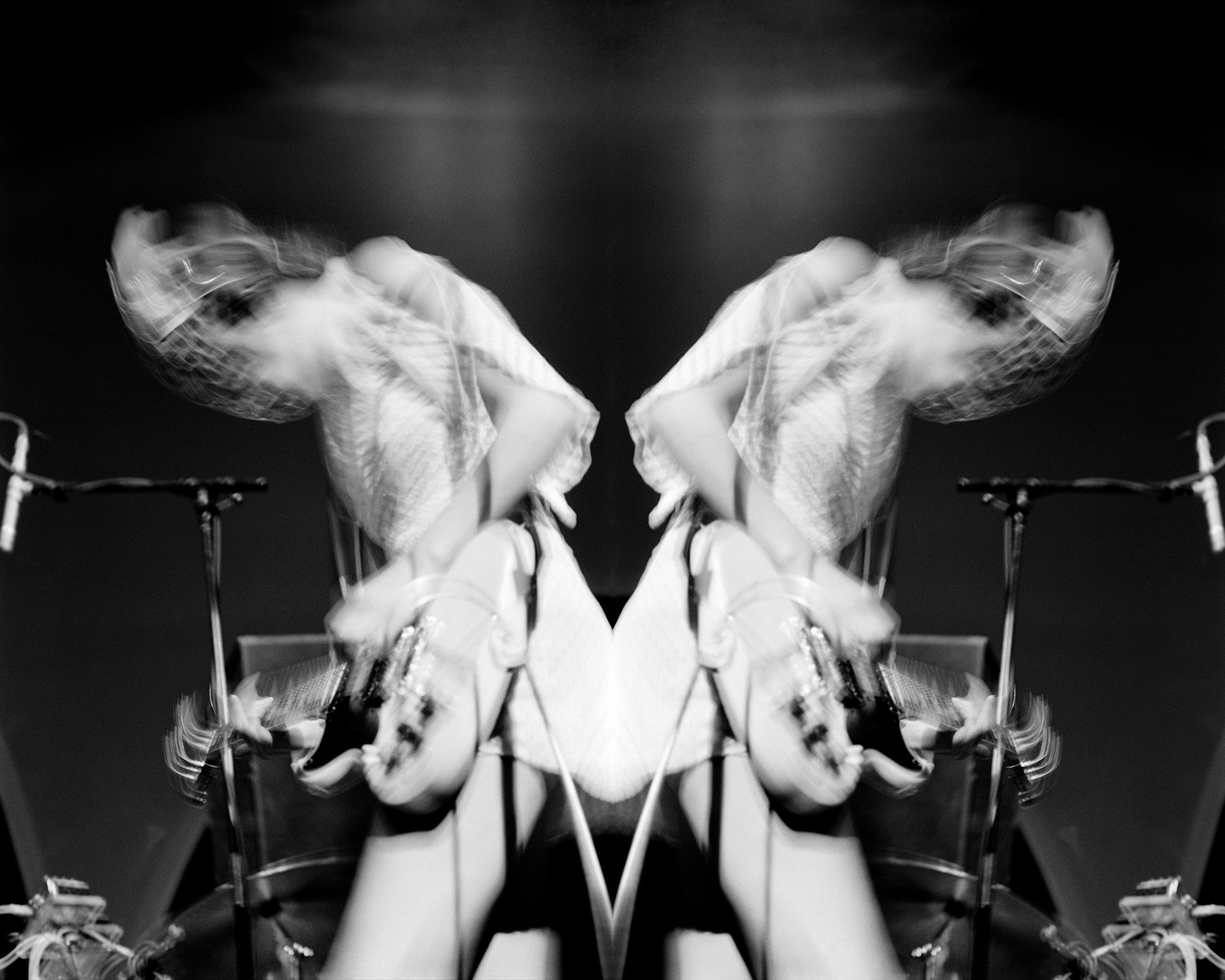
If you’ve spent any time in or adjacent to the Seattle music scene between the early 1990’s and late 2000’s, you will probably recognize a lot in the exceptional new photography book Making It: An Intimate Documentary of the Seattle Indie, Rock, and Punk Scene, 1992-2008 from the photographer Bootsy Holler, a long-time Seattle resident that’s currently living in Los Angeles.
Holler’s book is great not because she’s a first-rate photographer taking amazing photos (though she clearly is and does) but because it’s a time capsule of this unique time in music history, as grunge was becoming ubiquitous, fading, and a new generation of musicians were emerging from the Pacific Northwest. Nostalgia trip or not, Making It brought back the feelings of watching the Gossip or the Catheters or many of the other excellent bands live.
I was aware of Bootsy Holler’s photos because she often shot portraits for ROCKRGRL magazine, where I was also first published in the early to mid 2000’s as a writer. Her photos of Andrea Zollo of Pretty Girls Make Graves and Emily Haines of Metric are some of my favorite images to appear in those pages and those photos are included in this collection.
She has photographed some of the most iconic photos from this part of the world over the past thirty-plus years. Making It is a document of a time that’s important to me and to surely many, many other people. There’s a disparate collection of live shots from shows, posed photographs, color and black and white but it’s held together through an outstanding photographer’s eyes with a unique story and a visionary’s gift for storytelling.
Ahead of her book’s release, I spoke with Bootsy Holler by Zoom where she was kind enough to answer my questions.
One of the reasons I most wanted to talk with you is because this book isn’t a typical photo book in the sense that it’s not a collection of the most famous musicians you’ve photographed, or what was it like to live through grunge, especially with being in Seattle in the early 1990’s. I know a lot of people still have a fascination with that era of music history.

I don’t have Kurt Cobain, you know. Yes, I have Pearl Jam and other awesome bands. It was really hard for me to sell it first, because I’m like, this isn’t grunge. Nirvana wasn’t playing at the Croc anymore. I saw them at Key Arena for the first time, so they were already in large venues. Some people have misspoke and said I have a photo of Kurt. I don’t and never said I did. It’s weird how locked into grunge time some people are. I just happened to show up in 1992. To tell you the truth, I felt like I missed it. I’m not relying on a book about grunge. I’m not relying on a book about one artist.
Right, I understand that. This book is more your journey rather than you saying, “look at these cool bands I photographed!”
I asked myself how can I tell a story about something that’s different? Well, the only story I can tell is my own. I decided, okay, this is my story. This is through my eyes. This is me trying to make it. And a lot of these people are trying to make it. And a lot of them didn’t make it or didn’t become famous. And then look, there’s all these that did. And how cool is that? But not everybody makes it. But why do we keep making music or art? And it’s really based on the passion to do what you love.
That’s why you do it. You do it because you like it. If you’re done with it, you move on and you do something else.
And you have a lot of photos of bands like the Catheters, who were really ubiquitous in the early 2000’s because they ruled and put on an awesome show, but haven’t played together in a long time, as far as I know.
I photographed the Catheters multiple times, as well as the Gossip. The reason I photographed those bands multiple times was because, not only did I think they were good and I liked to listen to them, but they fucking put on a great show. And for a photographer, that’s what I want.
I want a great show because that gives me something. They’re not just staring at their shoes, right?
I started to integrate myself into the Seattle music scene probably around 2002-2003, probably about ten or so years after you, and I really was surprised at the emotional reaction I had to this book because we knew a lot of the same people back then, and you have photos of people who worked more behind-the-scenes. I mean, you have no idea who I am, but this book spoke to me because of those connections I made from going to shows all the time in my twenties.

Yeah, but that’s it. It’s a love letter to Seattle. It’s a love letter to all the fans. It’s a love letter to all the club owners. It’s a love letter to all the managers, all the bouncers, everybody that we wove together and kind of made that whole scene move and work, because really when it comes down to it, it’s a small group of people. It’s not that big of a group, you know? All of us weave together and make a family of sorts.
You’ve surely taken thousands upon thousands of photos, how did you winnow down what you included in this book?
I started in 2016, like pulling all my binders out, looking at all the bags, pulling out all everything I had printed at that time. And then looking at all the contact sheets. And for me, it was just kind of painstakingly, slowly going through everything. I must’ve spent five years just searching and looking and trying to grab the ones I really felt were not only good images, but helped tell the story.
Once I had a pretty big collection, then it was, “now what is my story?” And which ones of these work or don’t work? And The hard part was, I really was the only person that could do the work.
My designer who helped me might not think that that photo drives the next page, but I know why it drives to the next page. I know why it belongs in the story. I really was the only person to be able to tell the story. So it was, that’s why it was so slow.
That’s why it’s been nine years. And then I probably spent the last two years really honing in on the design and the flow. So for me, it was like, what feels right? How am I going to, how am I going to move through this story? And so that’s really what my designer helped me with. How are we going to break it down into these chunks? And then once I had that, then I was able to go, okay, the first block, all Northwest, all Seattle, all black and white, little stuff on me.
Second block, all color. Doesn’t matter who it is. Weave it all together. It flows from color flowing. Last block, all black and white. I wanted to go all full bleed.
But then where do I break the rules? I wanted to break things. I wanted it to be DIY, but at the same time look classy and fun. And stylish and not dirty. I wanted to make a piece of art and not follow any specific rules because I’m not a writer. I’m an artist.
It must have been extremely difficult deciding who was going to be included and who wasn’t.
Yes, a lot of people got left out because I was trying to keep it at 200 pages. That was hard to cut some people that I know belonged in there, but I just didn’t have the right imagery or it didn’t flow right.

This book covers from 1992 to 2008. Did 2008 coincide with when you left Seattle?
First of all, I met my husband and he was down here. So we dated for a year apart. So I thought, if this goes anywhere, maybe this is a good time for me to leave.
And then also my white shepherd pony, who’s in the book, was my sidekick. And she came with me to Endfest and everything. She passed away six months before I left.
Yeah, when you start getting out of that I knew I gotta make a living. I gotta step out and really push on advertising and agencies where I can make a decent paycheck. I mean, I never was trying to make a living off of rock and roll, you know? Photography was what I did.
I wanted to ask you specifically about one photo you took that I really loved, it was of Emily Haines of Metric. I knew it had to be in the first iteration of the Crocodile.
It was in the kitchen at the Crocodile. And, you know, it’s like, you know, where do you shoot? Where’s your lighting set? You’ve got 10 minutes with this person and I don’t know her personally. I’m fucking under fluorescent light. Why? Why try to manipulate it? Like, this is the reality and I’m a realist. I’m not trying to change things. I’m just going with the flow. This is what I have. I’m in this tiny kitchen. And I told her, listen, we’re shooting with the fluorescent lights. It’s not much light, so you gotta hold still. You know, it’s not sharp. It’s very slow. But it’s also that really rich color, you know, color changes when the shutters open. If you ever see anybody shoot night photos, you see how the sky changes color, color changes a lot.
It gives a feeling that an image does not have to be sharp or perfect to give you energy or feeling, you know, I mean, look at somebody like Nan Goldin or someone like that, you know?
Artists like that, that made me realize that it’s all about the energy and the personal connection, and it doesn’t have to be a perfect photo, and to be able to let go and just get what you can get and know that it’s gonna resonate through to becoming a print somehow, and that you’re gonna feel the energy through the paper.
It doesn’t matter if the image is sharp or not: it’s a feeling, it’s an energy, it’s a moment, and that’s all I’m ever striving for.
Carrie Akre, on the other hand, she and I worked together a ton of times and Carrie would come to me and know that I was going to help her build an image of herself that looked good or sexy or skinny or pretty or whatever, to kind of be out there in the public for her. So she, and she trusted me. And so a lot of the stuff with the women and even guys that you see in there that seem vulnerable with me. You know, they’re often people that I’m close to and people trust me.
Is there something you want people to take away from your book and your artwork?

Just that it’s a gift to everyone who connects with that time? I did it for myself, but it became a gift to everyone.
Before I hang up, can you talk about your in-person events coming up? You’re at Easy Street Records on Saturday, November 1 and Third Place Books in Seward Park on Tuesday, November 4.
I’m going to fly in early on November 1st, because we gotta do Halloween here, So we’re gonna do Easy Street. Marco Collins is gonna come out and… Do you know Marco?
I do! I think Marco probably knows everybody.
I asked him if he would be a kind of sidekick for me, and he said, yeah, I’ll do ’em both. I don’t care.
I feel like it’s not a book book. I’m not gonna sit there and do a reading. Right. So What I think we’ll do at the events is I have kind of a slideshow going and it’ll have some music and it’ll be the book going behind me.
And then we’ll just do some talking about the book and then we’ll just break off and then I’ll answer questions from people. So I don’t want it to be a big, long thing. It’s like, maybe it’s 20 minutes. And, and then people can, if they want their books signed, I can sign books and I’m gonna bring small prints.
I’m selling these small 7 by 11 inch prints because I can’t compete with the bookstores,. So I’m selling a book with a print, or you could just buy a print or you can buy a pack of postcards. Like I try to make it if you can’t afford a book, you could afford the postcards. So I have kind of a variety of stuff for people.
I wanted it to be accessible to people. And one of the things I’m always trying to do is make it easy for people to learn how to buy art or become a collector or make that first purchase if you’re young where you’re like, oh, I bought a piece of art.
You don’t have to buy expensive art to like it. And so one of the things I always try to do is have different levels of prices for art and, and you know, so if you want something huge and you have the money, that’s fine. If you don’t, these special little 7 by 11 prints are for anybody.
*** Bootsy Holler’s new photography book Making It: An Intimate Documentary of the Seattle Indie, Rock, and Punk Scene 1992-2008 is available on November 18 from Damiani but she has two in-person events where you can see her and purchase the book. They are at Easy Street Records on Saturday, November 1 and Third Place Books in Seward Park on Tuesday, November 4. ***
Discover more from Guerrilla Candy
Subscribe to get the latest posts sent to your email.