Eric Howk’s musical journey begins, as so many Northwest music stories do, with Sub Pop.
“I was a kid in Alaska watching Hype, the Sub Pop doc,” he says. “I was super obsessed with the Fastbacks and kind of like the more poppier side of grunge stuff.”
That obsession—and a guidance counselor’s offhand suggestion to “go meet more people like you”—was enough to send a teenage Howk on a $100 one‑way flight to Seattle on an airline that doesn’t exist anymore. He arrived with a bass, three winter coats, and no plan whatsoever.
“I had no plan. I had nowhere to sleep that night. I didn’t have money for a hotel. I just kind of figured it out.”
Seattle in the late ’90s was still buzzing from the grunge explosion, but the dust had settled enough that a broke kid could slip into the cracks and find a home. The Hurricane Café became his first anchor point. He ordered a $1.65 cup of coffee and let the city happen to him.
“A couple of the grittier punk rock servers took pity on me… ‘Oh honey, you’re fucked.’”
They gave him a couch. They gave him a community. And soon, they gave him a band.
The Lashes: Power Pop, Poverty, and Pure Momentum
Howk’s first real Seattle band, The Lashes, formed the way local bands often do: through retail jobs, shared obsessions, and sheer audacity. Working at the Levi’s store at 6th and Pine, he met Ben Lashes—charismatic, ambitious, and determined to build a band from scratch.
“You play music? I’m putting a band together. We gotta change your hair, but I’m putting a band together.”
Ben introduced him to power‑pop essentials—Raspberries, the Cars, Cheap Trick, Red Kross—and turned his world “from black and white into color.”
The Lashes became notorious quickly, flyering relentlessly and even picketing outside Sub Pop with handmade signs demanding the label sign them.
“We paid some unhomed people five bucks a sign for picketing outside Sub Pop like ‘Sub Pop sign The Lashes.’”
It worked. Sort of.
The band signed to Lookout Records, toured relentlessly up and down I‑5, and eventually landed a deal with Columbia’s alternative imprint Red Ink. The major‑label experience was surreal, sometimes dispiriting, and ultimately short‑lived. But The Lashes played hard, lived harder, and built a legacy that still resonates in Seattle’s collective memory.
“I got to see 50 states by the time I was 24, 25 years old.”
Then everything changed.
The Injury: A Life Rebuilt Through Music
In 2007, just as the band’s momentum collided with the music industry’s shift toward streaming, Howk suffered a spinal‑cord injury that nearly ended his career—and could have ended his life.
He doesn’t dwell on the accident itself. Instead, he talks about what happened next: the community that refused to let him quit.
“Shane (Tutmarc, from the band Dolour) decided he wanted to bring a mobile recording unit into the ICU so I could track a solo.”
Wearing a clamshell brace, surrounded by medical equipment, Howk recorded a guitar solo for Tutmarc’s country project. Nurses padded the back of the acoustic guitar with towels so it wouldn’t clack against his brace. They temporarily shut down the heart monitor because it was too loud.
“I recorded a guitar solo in the ICU that made it onto the record.”
That moment set the tone for everything that followed.
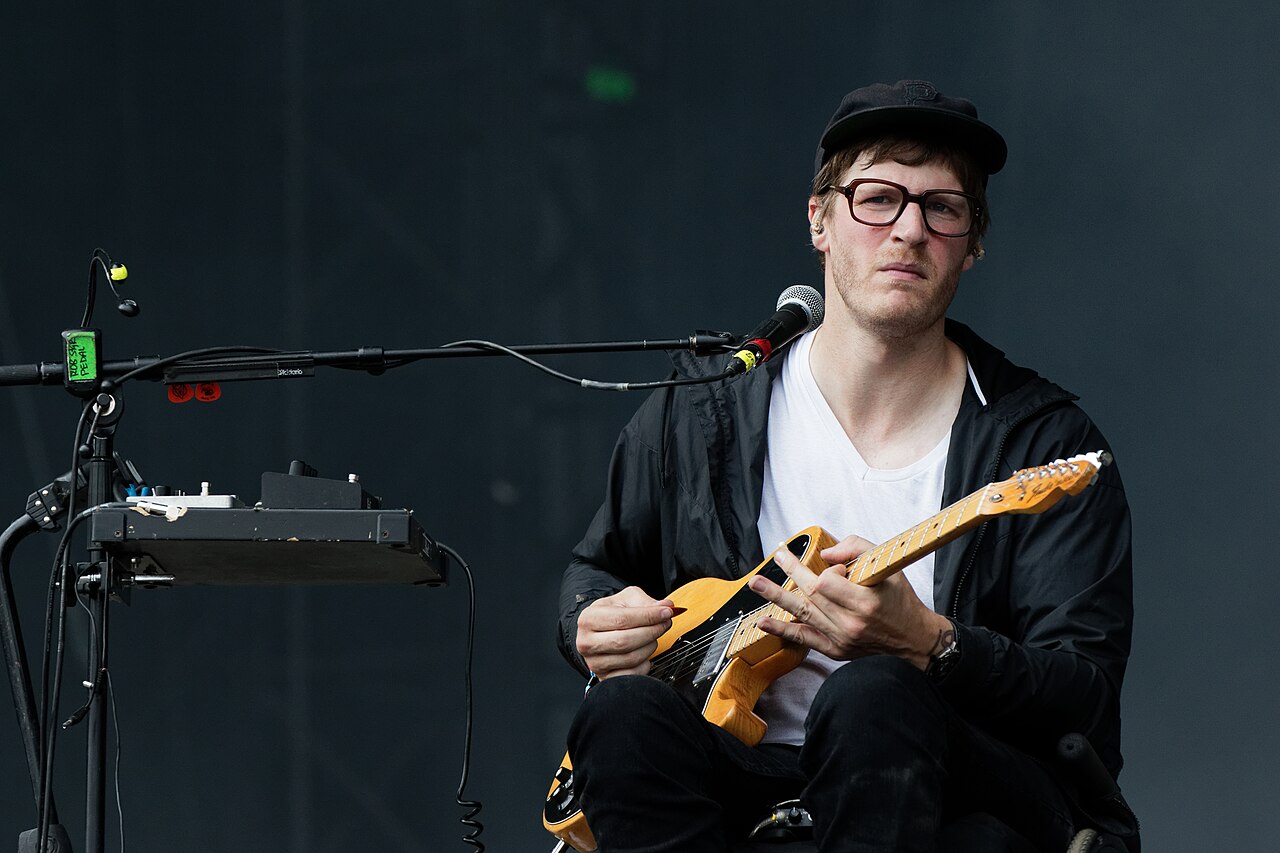
He taught himself to drive again. He toured with Kay Kay & His Weathered Underground, following their van in his own car, sleeping in cheap motels, and proving to himself that touring was still possible. He played with Shelby Earl for years, navigating inaccessible venues and unfamiliar couches. He joined Detroit’s The Hounds Below by learning their songs on a Casio keyboard while driving cross‑country.
“I don’t play keys at all… but by the time I got to Detroit I had it.”
Every challenge became a test. Every test became a victory.
Portugal. The Man: Ten Years of Everything
Howk grew up with Portugal. The Man’s core members in Wasilla. He and bassist Zach Carothers played in a high‑school punk band together. Their paths diverged—Howk to Seattle, Carothers and John Gourley to Portland—but the connection remained.
He nearly joined Portugal in 2007, right before his injury, but the band’s grueling schedule made it impossible. Years later, after crossing paths at festivals, he finally jumped onstage with them at Sasquatch without knowing a single song.
“I just went up and did a 90‑minute festival set… any time Zach pointed at me I would just have to rip.”
It worked. And it kept working for a decade.
He toured arenas with Portugal. The Man. He played every show—never missing a single date. He helped shepherd the band through its meteoric rise, including the Grammy‑winning Woodstock era.
But eventually, the physical toll of nonstop touring caught up with him.
“It’s the spirit is willing but the flesh is weak situation.”
He stepped away, passing the torch to Tilly Camorni, a young guitarist he personally recommended.
“It felt really good to give her the keys to that car that I put so many miles on.”
The Crocodile: Saving a Seattle Institution
In the midst of touring, Howk also became an investor in The Crocodile, helping resurrect the legendary venue after its 2007 closure. He and his partners rebuilt it into a multi‑venue complex with a hotel, resisting buyout offers from Live Nation and AEG.
“We fucking resisted AEG. We resisted Live Nation… this place stays independent or it dies with us.”
Earlier this year, the ownership group sold the venue to Comedy Tent (Upright Citizens Brigade), ensuring it
remains independent and artist‑focused.
“I’m happy with its fate… it’s in better hands than me now.”
Sky King: A Folk Legend, a Tragedy, and a Record That Needed to Exist
The story behind Sky King is unlike anything else in Howk’s catalog. It centers on Richard “Bebo” Russell, the Sea‑Tac baggage handler who stole a Horizon Air Dash‑8 in 2018, performed a barrel roll, and crashed the plane into an uninhabited island after a long, heartbreaking conversation with air‑traffic control.
Howk was on tour when it happened.
“I was obsessed … nobody around me at that show really got the weight of it.”
He later learned Russell attended Wasilla High School—the same school Howk graduated from. The connection hit hard. He began transcribing Russell’s final words, weaving them into lyrics.
“I wanted his words to have a little bit more throw… the worst thing that could happen is for him to do something that complicated and bold and have it disappear.”
The record came together quickly at Jackpot! Recording Studio in Portland: three days of tracking, two days of mixing. The title track uses some of Russell’s actual dialogue, carefully and respectfully.
Then, during a recent Alaska tour, Russell’s family came to a show.
“His sister came up to me… ‘We think what you’re doing is a nice tribute.’”
Howk gave them a guitar he’d decorated with the outline of Alaska and the words Sky King.
It was the kind of moment that clarifies everything.
Themes, Movement, and the Beauty of Not Knowing the Destination
Though Sky King contains heavy subject matter—mental health, mortality, disillusionment—it’s not a bleak record. Howk sees it as fundamentally optimistic.
“It’s the only way out is through.”
Movement is the album’s central metaphor: driving through the Midwest, flying over mountains, wandering through Japan, drifting through memory. The songs are filled with motion, even when the narrator feels stuck.
“My favorite part about driving through the Midwest is the drive through the Midwest.”
The record’s emotional core is acceptance—not of defeat, but of uncertainty. Of the idea that life is lived in transit, not at the destination.
“There’s a lot of driving and flying and daydreaming… being content with being on the move.”
A Life in Motion
Today, Howk lives in the woods, surrounded by trees and quiet, working on multiple records and scoring films.
He’s still writing constantly, still collaborating, still chasing the next idea. But he’s also finally allowing himself to rest, settling down in a nature-filled area outside of Portland.
“I love being in the woods.”
He earned it.
From the Hurricane Café to Lookout Records, from ICU recording sessions to arena stages, from Wasilla to the world, Eric Howk has lived a life defined by movement, resilience, and community. Sky King is the culmination of that journey—a tribute, a reckoning, and a reminder that even in the darkest moments, there’s beauty in the act of moving forward.
And like the folk legend who inspired its title, the record refuses to be forgotten.
Discover more from Guerrilla Candy
Subscribe to get the latest posts sent to your email.